Define the perimeter and the pressure points
- Map where equipment, lifts, or deliveries cross the line.
- Note pedestrian desire lines in retail and medical zones.
- Identify pinch points at docks, corridors, and utility doors. These factors set panel height, gate placement, and whether barricades need to flex for daily reconfiguration.
Surface and weather influence stability
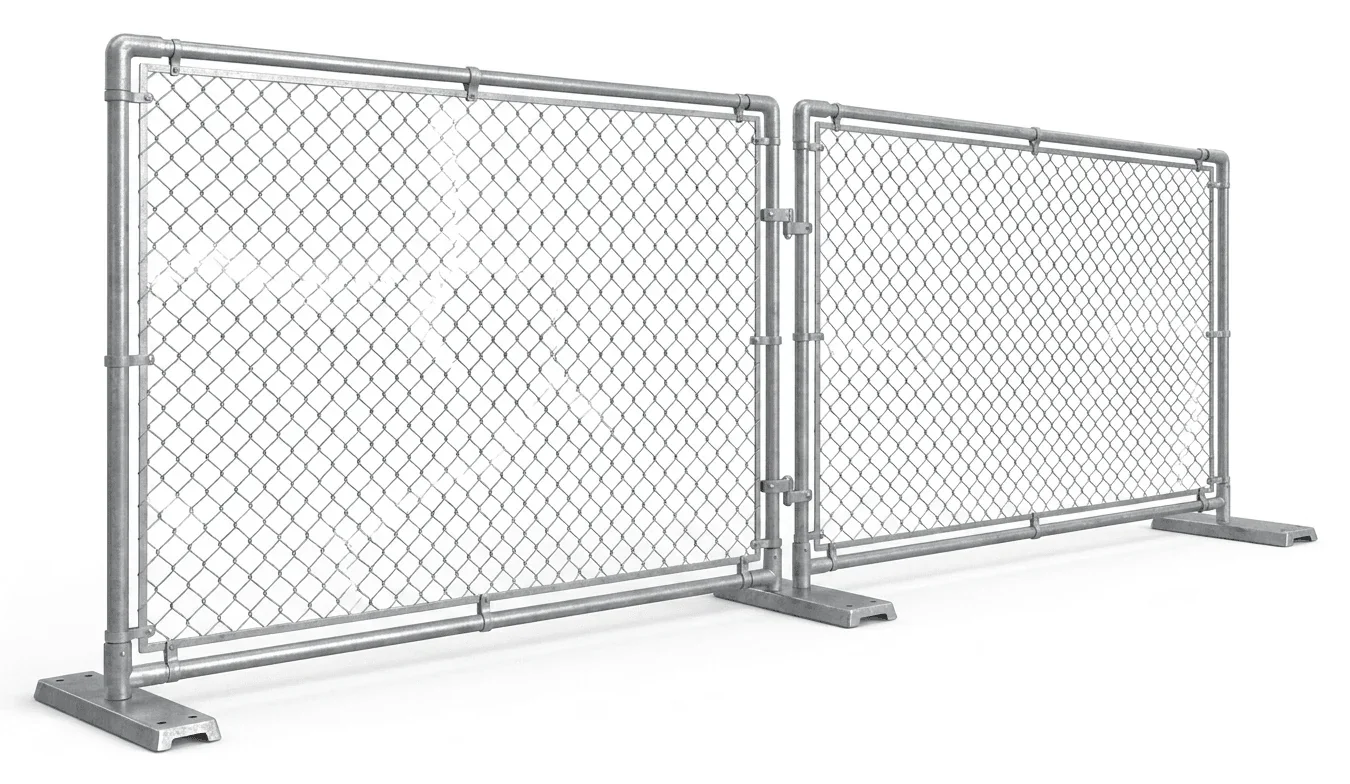
On silty soils that stay soft after heavy rain, freestanding panels benefit from wider bases and added site-stability factors to resist shifting. On paved slabs, narrow footprints help keep egress paths open and reduce trip hazards. Wind exposure at open industrial sites can differ from sheltered service courts downtown, affecting how connections and footing are selected.
Vehicle and equipment access
Where lifts, telehandlers, or forklifts operate, plan for swing clearance and turning radii at gates. For night work, pair barricades with lighting to keep routes visible without spilling glare into adjacent streets or entries. If the line must jog around uneven ground, modular panels with tight connections create a cleaner edge.
Related comparisons
- For work zones that require elevated access beyond the fence line: /aerial-lift-rental/
- For yard projects on variable ground: /rough-terrain-scissor-lift-rental/
- For interior service areas needing compact reach: /vertical-mast-lift-rental/