Start with the job geometry
- Can the generator or tower sit below the task area, or must it be positioned within the work zone?
- Is the mast height for lighting blocked by structures, trees, or overhead utilities?
- Do cords or light patterns need to cross active pedestrian paths in medical or retail settings?
Positioning governs cabling distance, spill light, and sound expectations near clinics and retail corridors. In tighter indoor-adjacent areas, compact towable or skid units often fit better than full trailer packages.
Ground conditions change equipment choice
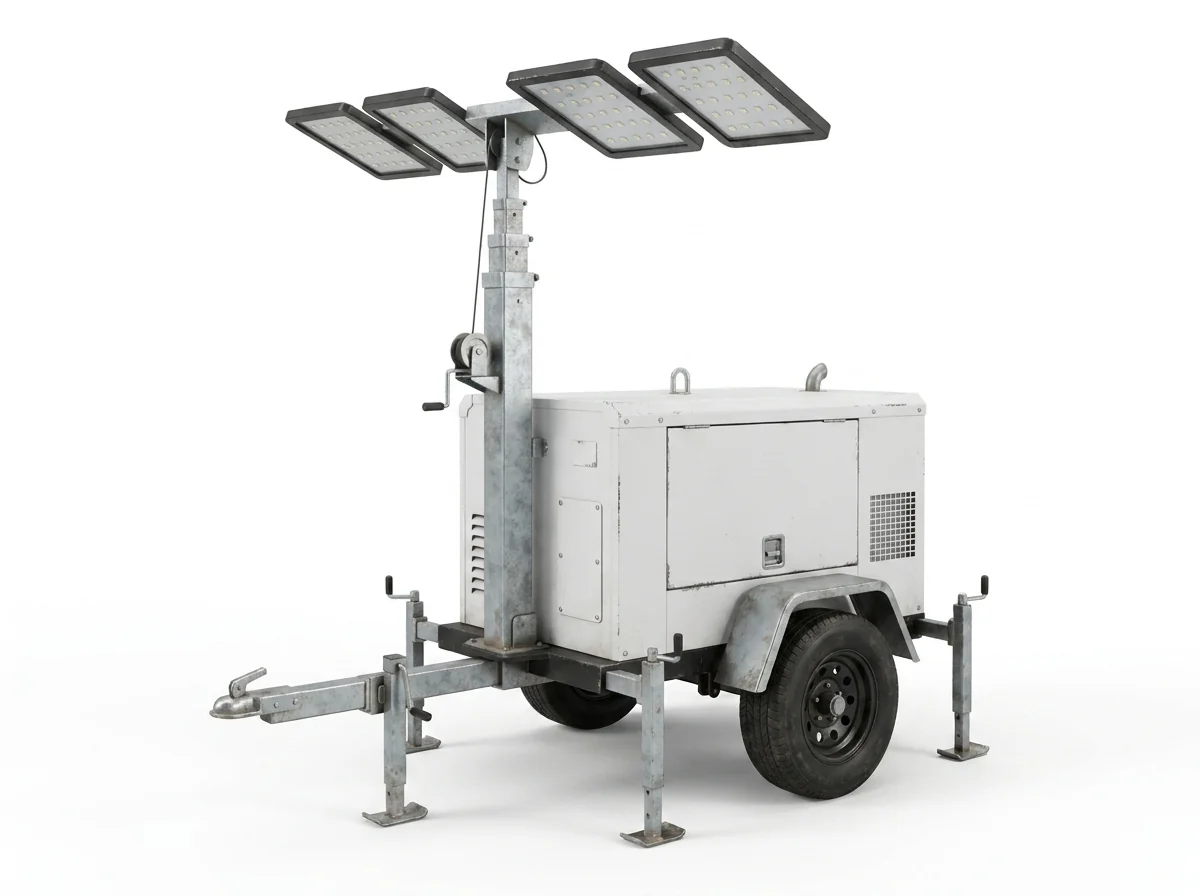
Lafayette’s saturated, silty soils after heavy rain can reduce bearing strength in laydown yards and utility easements. For outdoor placement on uncertain ground: - Favor light towers with wider outriggers and larger tires for stability. - Consider towable generators with weight spread over tandem axles rather than concentrated point loads. On paved slabs at hospitals, offices, or local distribution buildings, non-marking contact points and drip containment become planning factors.
Power sizing and runtime windows
Identify the largest simultaneous load, motor starting surges, and any voltage-sensitive equipment. For overnight lighting or extended maintenance shifts, longer runtime tanks reduce refueling touches. Where noise is a concern, inverter or sound-attenuated units matter near patient areas and residential edges.
Access route and logistics
Confirm the approach: gate widths, turning radii, and whether the route crosses soft lawns or stabilized pads. Steeper curb cuts and slick surfaces after storms affect towing and set-down spots. Keep cable runs off active drive aisles and note any requirement to pass through loading docks or service courts.
When lighting must cover mixed surfaces
In industrial sites and energy-service yards, aim for towers with adjustable mast rotation and segmentable light heads to avoid glare into adjacent traffic. For indoor-outdoor handoff zones, pair portable work lights inside with a tower outside to keep generator exhaust outdoors.
Related comparisons
- Indoor height work near power and light: /electric-scissor-lift-rental/
- Outdoor slab and yard access: /rough-terrain-scissor-lift-rental/
- Elevated exterior tasks that also need lighting focus: /boom-lift-rental/