Start with placement and height
Scissor lifts go straight up. The question is simple: can the machine sit directly below the task? If yes, measure platform height needed and add room for the guardrail and working reach. If not, a boom lift may be the appropriate category; compare options at /aerial-lift-rental/ or /boom-lift-rental/.
- Typical indoor tasks: lighting, duct work, signage, and ceiling access in medical and retail buildings.
- Typical outdoor tasks: façade work, canopies, steel erection support, and low-elevation exterior installs at industrial sites.
Lafayette site factors that change the choice
- Indoor floors: Many local medical and retail facilities require non‑marking tires and low‑emission operation. Electric slab scissor lifts fit this expectation, with compact footprints for narrow aisles. See /electric-scissor-lift-rental/.
- Outdoor conditions: Frequent rain and silty soils can soften unpaved areas and pond around new slabs. Rough‑terrain scissor lifts with higher ground clearance and wider tires are often selected for unfinished jobsites. See /rough-terrain-scissor-lift-rental/.
- Logistics corridors: High‑bay storage and cross‑dock buildings near major routes often have smooth slabs but long travel distances. Battery runtime, platform capacity, and stowed height may narrow the model list.
Key measurements before you compare models
- Maximum platform height required.
- Doorway and gate clearances: width, height, and turning space.
- Floor rating and surface type: finished slab, coated floor, pavers, or compacted base.
- Work envelope: need to go straight up only, or reach over obstacles (which points to /boom-lift-rental/)?
- Power access: charging opportunity for electric units when used across multiple shifts.
When a scissor isn’t the right geometry
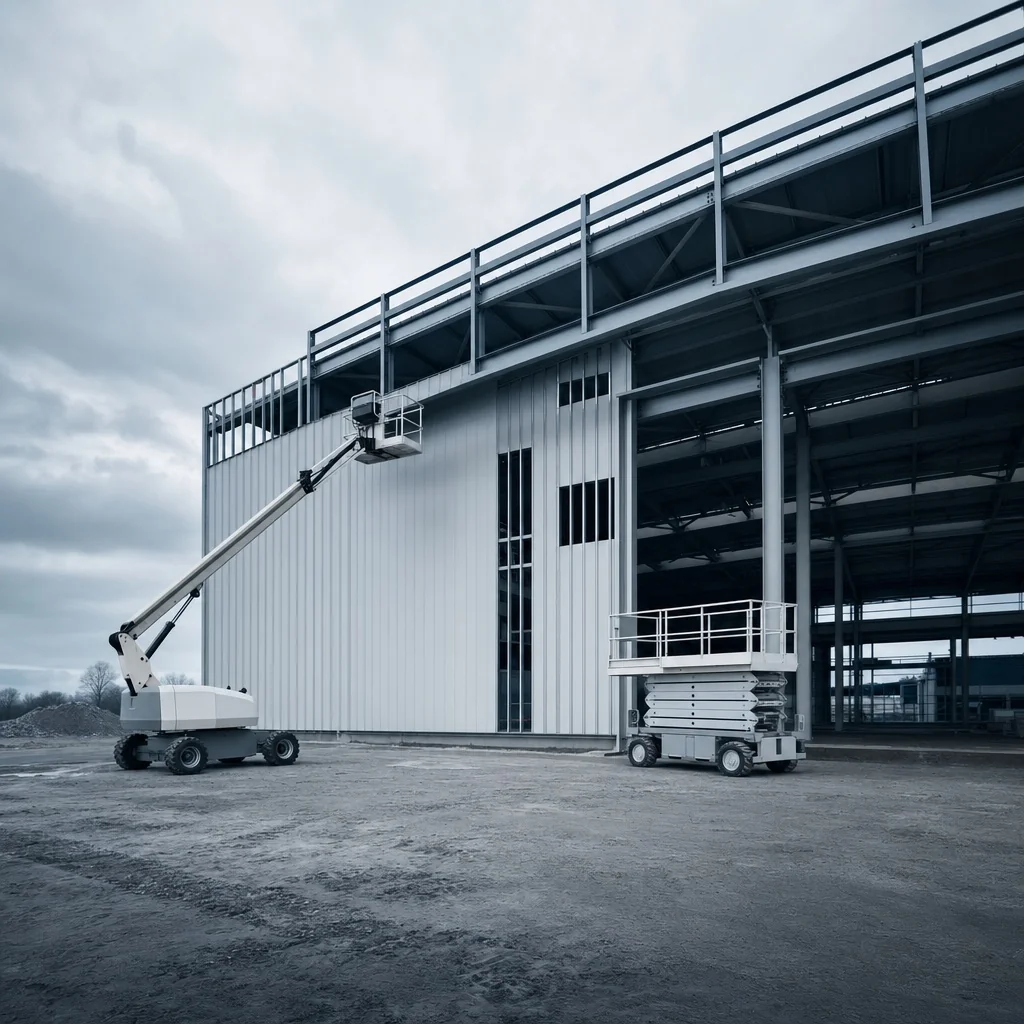
If the machine cannot sit under the work or must reach over equipment, conveyors, or canopies, an articulating or telescopic boom may fit better. Compare options at /aerial-lift-rental/ and /boom-lift-rental/.
Nearby work areas
Projects often extend into surrounding communities with similar conditions—industrial yards, distribution buildings, and expanding commercial districts. The same placement, surface, and height checks apply before choosing electric or rough‑terrain scissors.